|
|
|||
|
Tips & Tricks for Dog Sled Glide Waxing |
|||
|
|
|||
|
Content: |
Links: |
||

|
|||
|
|
||
|
The only tools you REALLY need will be:
|
|
||
|
|||
|
 |
||
|
 |
||
|
 |
||
|
|||
|
|||


Tips & Tricks for Dog Sled Glide Waxing
Content:
Links:
Dog sled runners periodically need to be glide waxed for optimal glide and performance (depending on the base and the selected wax, expect about 3% to 5% performance improvement on a sprint race course; the seconds you might need to win). Sled runners are glide waxed the entire length of the base. Glide waxing both protects the runners and adopts the base to the conditions. Glide waxing maintains the "health" of the base by filling pores in the base and preventing excessive drying. In order to maximize the durability of glide wax, the wax is heated into the base using an iron with the excess wax scraped off.
The only tools you REALLY need will be:
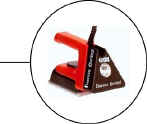
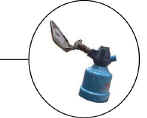
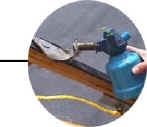
- a good electrical iron with an adjustable heat control (no steam holes) or a gas torch with a waxing attachment for those remote locations
- a thick plastic wax scraper
- a metal scraper
- some X-country ski wax
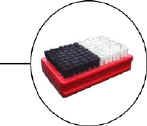
- a nylon brush
A gas torch often produces too much heat. To wax at race sites I therefore got an inexpensive traveling iron and an inverter which allows me to power the iron using my truck's 12V battery.
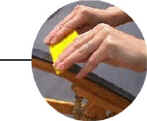
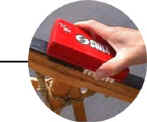
Scrape any old wax off the base as thoroughly as possible using a plastic scraper. Spray a good amount of citrus wax remover onto your base and soak for a couple of minutes. Use paper towels to clean wax residue off. If your runners' base is scratched and nicked, use a metal scraper to scrape off thin layers of base material until the surface is smooth again.
The smoothness of your runner base should match the texture of the snow. The ideal structure will have tiny ridges along the base, less than half the size of snow granules. The coarser and wetter the snow the greater the structure. The coarsest structure can be achieved with a Scraper’s rilling edge. For medium and fine structures use an appropriate brush. For temperatures down to 27�F use a steel brush. For colder temperatures use a brass brush. Brush in long strokes from tip to tail. P-tex bases are malleable and you can smooth or flatten the structure by pressing it out with a thick, sharp plastic scraper. This makes it possible to structure and restructure your base many times during the life your runners.
Heat your iron or waxing torch to a point just hot enough to melt the wax you will be using. If the iron smokes it is way too hot! The iron temperature for cold-snow waxes should be around 140-150 deg. C. The setting for warmer-snow is around 120 Deg. C. For beginners, simple paraffin waxes are all you need to worry about and they melt at a very low temperature. (Note: Fortunately, paraffin waxes are also cheaper and are easier to apply than high-end waxes.) The most efficient application method is to rub the end of the block or stick of wax on the iron face and then crayon the heated end of the wax on the base. By crayoning on semi-heated wax you use up less wax than by the old method of dripping wax from the iron tip. You just need enough wax to cover the base with a thin layer...any more will simply be wasted. Once you have the base covered, gently warm the wax into the pores of the base by moving the iron up and down the glide wax areas. Keep the iron moving until you have clearly melted all the wax. NEVER let the iron touch a bare ski base. Let the ski cool completely before scraping.
Make sure to support the sled as much as possible (get a second person to hold the sled if possible). Always work from tip to tail using gentle, fluid motions with the scraper. NEVER use a metal scraper to scrape wax! Try to angle the scraper towards the direction you are scraping and use your entire hand to hold the scraper since they often slip creating little nicks and base cuts. Try to get as much wax as possible off the surface for superior glide. Remember to brush before and after waxing. A perfectly smooth base can stick to the snow like two smooth pieces of glass stick together. Roughen your base with a brush to match the texture of the snow to eliminate this suction for faster running, easier turning. The warmer the snow the coarser the structure. A good nylon brush is an excellent finishing tool. Now you are ready to go!
Selection of glide wax is actually pretty easy for beginners. Just follow the (air) temperature ranges on the package and you'll always be in the ballpark. In purchasing wax, a beginner's best bet is a combination package with several colors in one package. Glide wax stores very well as long as you keep the wax in cool areas away from heat sources or direct sunlight. Forget about the high-end waxes until you have mastered at least intermediate technique and you are on performance equipment. Toko and Swix feature wax selection tools on their web sites.
Recent research has proven that waxing fumes do represent a certain amount of health risk--particularly the high-end fluorocarbon waxes. Most researchers conclude that cheaper, paraffin waxes burn fairly "clean" but still advise heating waxes in well ventilated areas and limiting exposure.